Bernie Borges (00:00)
Imagine this, seven days from now, the people around you at work and at home feel calmer, clearer, and more capable because of how you show up. Less tension, more trust, better follow through, higher morale. Not because you got louder, but because your influence got more intentional. That’s what I’m talking about today.
And if this is your first time here, welcome. I’m Bernie Borges.
founder and CEO of Fulfilled@Work Academy. I call myself the Fulfillment Architect. And if this video is relevant to you, please subscribe to my channel.
Here’s the problem that I’m addressing in this episode. We think leadership is what we say,
But people respond to what we consistently transfer. Stress or steadiness, clarity or confusion, agency or dependence. And that transfer happens whether you’re trying to lead or not. So the question isn’t, do I have influence in my leadership? The question is, what am I transferring to the people that I impact? Now, before I go further, let me state the obvious. I am not the first
to speak on the role of influence in leadership. The concept of leadership is influence has been discussed by a lot of big voices and for good reason, it’s true. But where I think my lens on the role of influence in leadership is different is this. Influence is usually taught like it’s mainly a workplace skill, a way to get buy-in, drive results, or improve performance.
That’s not wrong. It’s just incomplete. So here’s my belief system. And this is my lens. I call it fulfillment-centric leadership. The goal isn’t influence for influences sake. The goal is influence that makes life more whole at work, at home, or in the community. Because you can get results and still cost people their health.
You can hit goals and lose your relationships. You can win at work and slowly drain the life out of yourself and the people around you. That’s influence, but it’s command and control behavior. Fulfillment-centric leadership is about head and heart influence. Influence that leaves people better, more capable, more steady.
more connected, more alive, and more willing. And it applies across all of life, not just work. So here’s the path that I’m going to give you in this episode. It’s three steps. The five pillar influence scan to help you locate where you’re influencing. The influence triangle to upgrade how you influence.
and then the seven day influence audit, So you can put this into practice immediately. It’s simple, practical, and you can start today. And just so you know who this is for, if you’re the kind of person who cares deeply, carries a lot of responsibility and people rely on you, this is for you.
And if you’ve ever thought, hey, I’m doing the right things, but it still feels heavy, that’s usually a sign that your influence is working, but it’s draining you. So let’s run the scan. It’s the five pillar influence scan. And as I go through these, don’t overthink it. Just notice what resonates, because awareness is where influence becomes intentional. Pillar one, health.
Your health, both physical and mental, is influence. How you handle stress is influence. How you treat sleep is influence. Your boundaries with screens, food, alcohol, recovery, all influence. Ask yourself, do people around me feel permission to take care of themselves or pressure to neglect themselves
to get results? Because if you’re always running on empty and wearing it like a badge, you’re teaching a lesson whether you mean to or not.
Pillar two, fitness. Fitness isn’t about looking a certain way or winning a medal. It’s about your relationship with movement, discipline, and consistency.
Do you model all or nothing intensity or do you model sustainable strength? Ask yourself, do people around me see that strength is built or that it’s forced? Forced energy gets short bursts, but it results in exhaustion. Strength built consistently over time becomes identity, confidence, and contagious energy. Pillar three.
Career. Career influence shows up as standards. It’s ambition, clarity, accountability, ownership. How you respond when someone makes a mistake. How you speak about people in public and in private when they’re not in the room. Ask yourself, do I create agency or dependency? Because some leaders influence people to rely on them for everything.
Other leaders influence people to think, decide, act, learn, and grow, even in the face of failure.
Pillar four, relationships. In relationships, influence is your tone. It’s your presence. It’s how you listen, how you repair, how you mentor, how you coach, and how you show support. It’s not always what you intend. It’s what people experience. Ask yourself, after a conversation with me, do people feel valued or managed?
This one’s humbling because it’s easy to treat people like a problem to solve instead of a person to understand.
Pillar five, legacy.
Legacy is impact today, not just when you’re no longer around. What you normalize as impact on people, processes, and outcomes. It’s what you tolerate. It’s what you repeat and what you model. Ask yourself, what behavior am I unintentionally teaching as normal? Because you don’t need a big platform to leave a legacy. You’re leaving one in the people who watch you every day.
Let’s do a quick reflection. These are the five pillars of influence. And as you can see, they’re holistic. They’re not limited to work. And if you’re thinking, yeah, I don’t want to be intense. I don’t want the people that I influence to depend on me. I want them to feel valued. That’s the fulfillment centric leadership path. Because when you influence people holistically across these five pillars, they experience fulfillment.
Now they may not use the word fulfillment to describe how you make them feel, but that’s what it is. Now remember, I am not the first to speak on the role of influence in leadership. My approach through the lens of fulfillment requires that we become more self-aware of how we transfer our energy when we influence people, whether at work, at home, or in the community.
Okay, quick pause. If the five pillar influence scan gave you a couple of oh wow moments, that’s good. Because that scan is the foundation of my fulfillment-centric leadership training. And let me say this, it’s not about being perfect. It’s about becoming intentional with the influence that you already have. And the ROI is real. Fewer fires to put out, more trust in your relationships and in your teams.
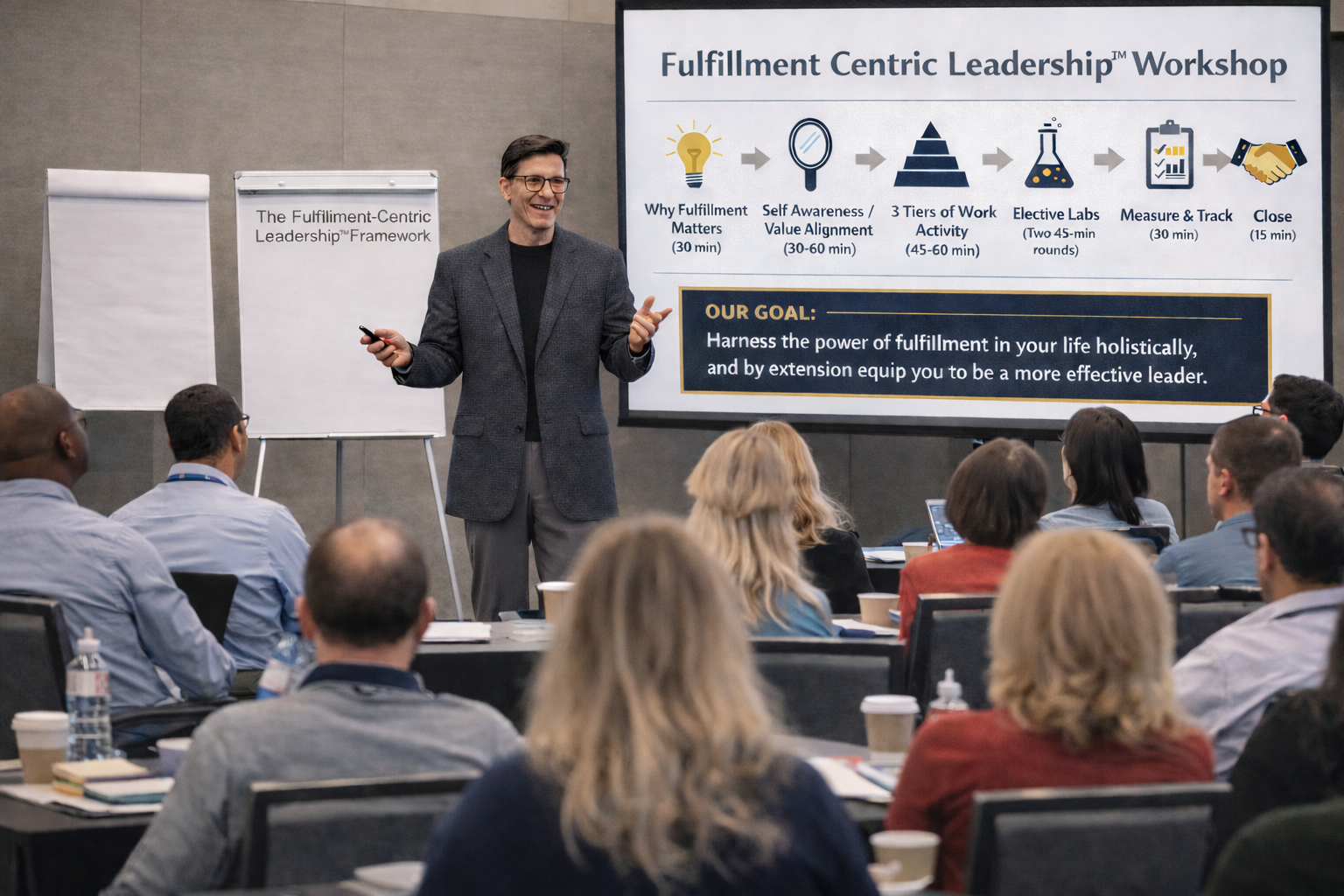
better follow through, more emotional steadiness, and honestly, more energy when you approach all situations of influence through the lens of these five pillars of influence. So if you want to learn more about the fulfillment-centric leadership training, it’s linked up in the show notes.
All right,
let’s upgrade the influence. It’s a simple framework that I call the influence triangle. Influence is built on three things, presence, proof, and permission. Presence is the emotional energy that you create. When you walk into a room, whether it’s physical or digital, does the mood settle or does it tighten? Do people engage willingly or are they guarded?
Presence is influence, even when you say nothing.
Proof is whether your actions match your words. People don’t follow what you preach. They follow what you practice. Your consistency is influence. Your integrity is influence. Your follow through is influence.
Permission. Permission might be the most powerful one.
Do you make it safe for people to try? To speak? To be honest? To fail and recover? Because a huge part of leadership is giving people permission to become more of themselves, not less.
When presence, proof, and permission are aligned, that’s head and heart influence. That’s self-aware leadership that builds people up.
One more time on this point. I’m not the first to speak on the role of influence and leadership, but here’s what I want to stamp into this conversation. Your influence doesn’t just shape outcomes at work. It shapes the wholeness of a human being across health, fitness, career, relationships, and legacy. That’s the fulfillment-centric difference. And now, the seven-day influence audit.
Here’s what I want you to do right now. Pick one pillar, just one. Health, fitness, career, relationships, or legacy. Pick one. And for the next seven days, ask one question at the end of the day. Did my influence make things heavier or did it make people stronger? That’s it. Just one question, seven days. Now, if you want accountability,
Drop a comment with the pillar that you’re choosing this week or send me a private message. I read each one, I really do, because I’m practicing influence myself through the lens of fulfillment. Just type, I’m choosing relationships or I’m choosing health or whatever it is you want to tell me. And if you want to go deeper on fulfillment-centric leadership training, the link is in the show notes. Leadership is influence, but fulfillment-centric leadership
is influence that leaves people more alive, healthier, stronger, clearer, more connected, more engaged, more intentional about the legacy that they’re building. Because the deepest kind of leadership isn’t just what you get people to do, it’s what people become because of your influence. If this episode resonates, subscribe to my channel. I show up every Monday with more
on fulfilled leadership. I’m Bernie Borges. I call myself the fulfillment architect. I’ll see you in the next episode.

 Be your executive coach