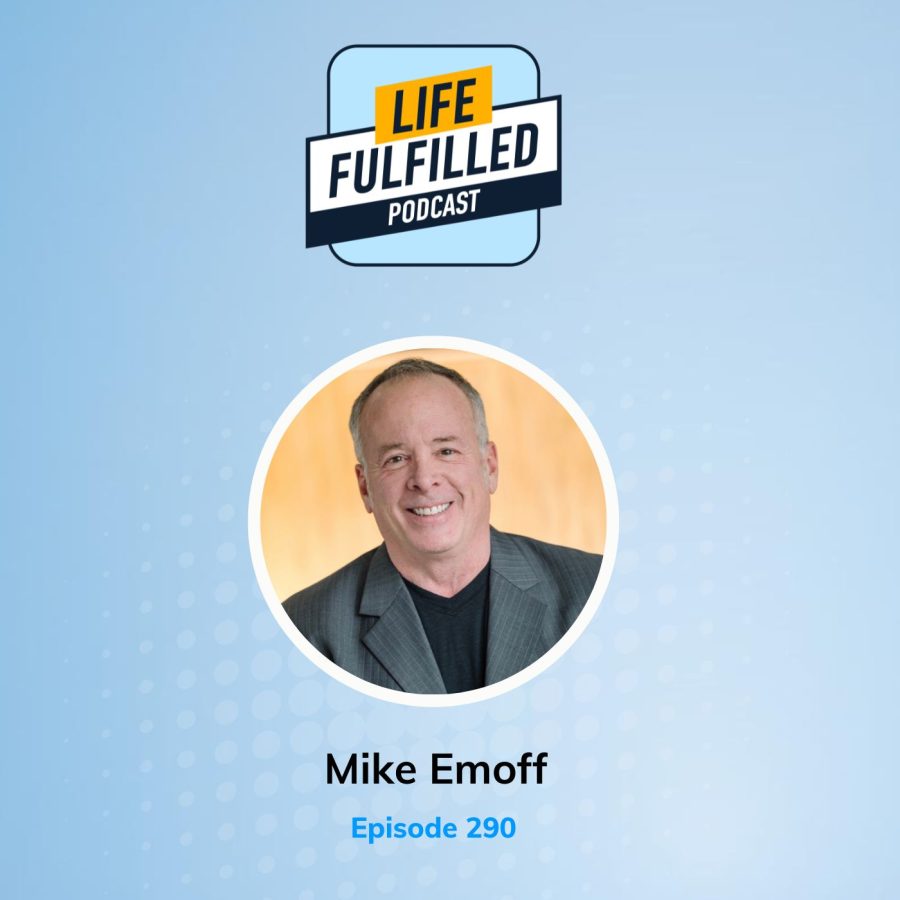
Bernie Borges [00:00:00]:
What if the most important investment that you could make isn’t in a stock, a startup, or even in yourself, but in someone else? Not necessarily a family member, not a business partner, but a student that you’ve never met, or a young employee that’s just starting out, or a mentee who has no one else in their corner. My guest today, Mike Emoff has built a 46 year business, has co authored a Wall Street Journal 2 best SOL selling book with his 12 year old son. We’ll hear more about that. And he’s mentored college students for three decades. And he’s also chaired the Dayton air show for 17 years. He’s also someone who has spent decades building something that most people never do. A life that’s organized around giving. For Mike, giving back isn’t a retirement plan or a strategy.
Bernie Borges [00:00:58]:
It’s simply who he is. And today we’re going to explore what it looks like to live a life of intentional legacy. Not someday, but right now. Mike, welcome to the Life Fulfilled podcast.
Mike Emoff [00:01:13]:
Thank you, Bernie. I’m pleased to be here.
Bernie Borges [00:01:23]:
So glad to have you. Mike, you are the president of Shumsky Enterprises, which as I said, is a 46 year family business in the promotional products industry. You’re based in Dayton, Ohio. You are a co author of the Wall Street Journal number two bestselling book, the Money Will Follow. You co authored that with your son. I know. We’ll hear about that. You’re a mentor to marketing students at Wright State University.
Bernie Borges [00:01:50]:
You’re a civic leader who has served on more than 20 boards. And in this conversation, let’s go deep on what it looks and feels like to live with a deeply rooted sense of purpose across every decade of your life. What it really means to be a mentor and how to become one. And how giving back creates a ripple effect that outlasts any single career or achievement. And finally, why it’s never too late or too early to start packaging your life’s wisdom and passing it on. Mike, I know you have a philosophy, so I think that’s where we should begin. Share your philosophy about this with us.
Mike Emoff [00:02:28]:
I started with giving back early. So my philosophy goes back to when I was a kid. My mom got into baking cookies for the vets and the actually active duty Vietnam fighters. The US was in Vietnam in the 60s and that was an exposure that put me in a position where I understood we were helping somebody that that needed help. It was, I was a kid, so for me it was cookies to somebody that was out fighting for my freedom. And I understood that I didn’t understand much more than that at the time, at 10 years old, but that was, I think, the beginning. That for me started early in giving and giving back and being part of something that’s past your family. And so it made a big impact on me.
Mike Emoff [00:03:15]:
And so I say it like that, because anybody who maybe didn’t start early in giving doesn’t yet understand the value proposition, which I’ll cover on that today. And it’s never too late to start. So you mentioned that in your intro, and it’s very true. So that happened, you know, that happened early as a framing for me.
Bernie Borges [00:03:35]:
Well, not only is it never too late to start, but as you just shared in your backstory, it’s never too early to start. So obviously that that was shaped in you at a very young age. Why don’t you just kind of, you know, continue to tell that story? Because I know that it went beyond that. Because even at the age of 13, if I remember correctly from our conversation, you got into the family business under your grandfather. And that, that sense of giving, that philosophy of giving was. Was there throughout all of that.
Mike Emoff [00:04:06]:
I was always part of that. And I think that the message, the first message for the listeners is that if you have children, you can start with them very young in teaching them what’s right, what’s wrong, and just doing the right thing. I think that people can simplify my messaging by saying it’s the right thing to do to help people that can help themselves, perhaps, or any situation where you can feel good about giving in any form. So it’s in any form for me. I started early. My grandfather had a business that he started with my grandmother back in 1953, and. And I came in early because my grandfather bought this machine. Our company is.
Mike Emoff [00:04:45]:
And was in the promotional products distribution business. And so he wanted to have a certain level of service for his clients. And service goes a long way in the philosophy of giving, by the way, because you realize that people need things. He couldn’t figure out how to use a hot stamping machine. I was 12 when he introduced me to it. By 13, I was his hot stamper. I just paid a dollar a name and talk pressure. I didn’t want to mess one up because I would have to not get.
Mike Emoff [00:05:15]:
I wouldn’t get that dollar, and I would feel guilty about ruining whatever I was printing. So it was. It was a sense of responsibility at that age by. By going to work in a family business and feeling like I actually contributed because he couldn’t do it. And I Felt really good about it. It was not like I was given a job as a favor. It was. I’ve g.
Mike Emoff [00:05:36]:
I was given a job for a purpose. And so I understood that really early. And so that started to shape my life early on, helping people, and that’s been natural for me. So I don’t feel like it is something special, Honestly, that’s not special that I did. It’s what people should do, and that’s my approach.
Bernie Borges [00:05:56]:
You said something, Mike, that I want to come back to because it’s easy to pass by it. You said that in business, delivering a good service is a form of giving. Elaborate on that.
Mike Emoff [00:06:11]:
Yeah. I have always had the philosophy of doing the best I can do in everything that I do. And not for me, but I want. I’ll take it today. If we have a client that’s super happy and they send me a thank you note or they see me and they’re smiling and shaking my hand and saying, you get it, you understood what we wanted to get done. That’s the outcome. I’m very outcome driven. And so if you take it all the way back to where I.
Mike Emoff [00:06:36]:
Anything that would do, pleasing somebody with a job that felt good and that reinforced that I was doing the right thing. And I felt really good about going through life, all the way through school, after school, about making sure that ultimately I personally hit the mark. I translate that into our business hits the mark, and I translate that into we’re making somebody happy. And making somebody happy is a form of giving. So that’s part of the foundation of what I’ve been either taught or self taught both into doing so.
Bernie Borges [00:07:15]:
I also want to come back to something that I said in the introduction, Mike, and that is that your story is about living a life of legacy. Not someday, not tomorrow, but right now. And as you know, legacy is my fifth pillar in my five life pillars in my platform. Right. Health, fitness, career, relationships, and legacy. And I’m all about legacy is impact today, not necessarily just waiting till how you want to be remembered. And I know that mentoring is a big part of who you are. So give us some insight into your mentoring journey, because I know you’ve done a lot of it, and it’s not been confined to one specific, you know, cause or purpose or avenue, but it’s really been multifaceted.
Bernie Borges [00:07:58]:
Why don’t you speak?
Mike Emoff [00:07:59]:
It has, yeah, it has been multifaceted. But there’s something that happened that triggered it for me, and it was when I started working full time. I graduated Indiana University in 1980 went to work for my grandfather. Came in on my very first day, and my grandfather said, okay, let’s get out and sell something. And I don’t know how to sell something. And I never was trained on selling something. So I asked my grandfather, what is your training program? And he said, what? What do you mean, what is my training program? Here’s a catalog with things in it that your clients will want to buy. Take this catalog and go out to prospects.
Mike Emoff [00:08:41]:
Knock on doors basically 1980. And so I was kind of surprised by that, and I was rethinking my decision of what I’d do for a career. Honestly, what happened from that is I went and knocked on a few doors and I realized that I needed to know more. And I went to this back in 1980, 80 and 81. There, there was a phone, there wasn’t an Internet. There were buildings with names on them, and there was not really a directory that you could Google. So I would go to the bigger buildings and I literally would walk in and ask to meet with procurement or somebo that might be in marketing or whatever that might be, and this one company specifically, who had a big parking lot and a big building. I asked for procurement, and the procurement guy met with me.
Mike Emoff [00:09:30]:
And my question, interestingly, to the procurement guy is he knew I was new. He could tell. I said, I’m new at this and I would like to ask you to mentor me. That was my strategy. And I figured that out, I guess kind of impromptu, but early I understood that I couldn’t do it on my own. I knew what my grandfather knew, but I didn’t know what the clients who were eventually going to buy from us knew. So I asked this guy with all good intentions. I didn’t even expect him to buy from me.
Mike Emoff [00:10:01]:
It was like, can you mentor me? And he said, kid, I’d be happy to mentor you. And I just had a client for life. It was the weirdest thing. I’m like, okay, so that’s a strategy. If you help people and they’re nice to people, they’ll help you. And so not everybody obviously is like that, but I think most people are genuinely like that. So that was the point where I realized that my networking, which included a very heavy weaving in of helping people, became infectious to me. I understood that.
Mike Emoff [00:10:32]:
And so I learned the value of having somebody mentor me. And I realized it was basically like magic how effectively it worked. And I went intentionally and started to find places I could volunteer my time on ports and meet people and continue the networking. And it’s not self serving at all, but it has value when you do that. And I understood that there was. If I gave, I get back. That’s where that all started for me. And so it’s a very simple story, but it’s a real story and it made a big impact.
Bernie Borges [00:11:07]:
I love that story. And I’m impressed with that procurement gentleman who embraced that opportunity to mentor you. That’s really terrific. You’ve got a phrase called coveted mentor. Is that what you mean by in that story? Is that embodied in that story?
Mike Emoff [00:11:25]:
I believe that everything you’re successful with and everything you make, I also invent on the side. And I’ve been doing it for a long time. Takes a skill set and a skill set, I covet it. And the people who I work with and mentor, they covet the fact that I’m the person that gives them the attention. And I don’t take on a job. I call mentoring a job. It’s not really a job, but I take it on and I give 100% in it. Not everybody does that.
Mike Emoff [00:12:00]:
And I’m exposed to that in a lot of the programs like my mentoring at Wright State University with the students that are there and juniors and seniors in the marketing business school. And some of the mentors feel it’s an obligation or it’s a box to check off that they’ve done it and they don’t embrace it to the point where it becomes a true magical experience where you connect with people that stay in touch with you for their entire career because of it. And I have that. And so it’s coveted if you do it right. It’s probably disruptive if you don’t. And there’s sometimes a fine line between, between the two. You can’t do something and not want to do it and do it well or feel it’s an obligation, do it and not really take it to the level it can go and you won’t have that impact. And that’s.
Mike Emoff [00:12:50]:
I see it every day, but I call that coveted. I think that people who have a chance to work with me feel valued that they had me instead of maybe some other mentors, but. But maybe not. But that’s the impression that I get now.
Bernie Borges [00:13:05]:
Mike, you’ve been mentoring at Wright State University for decades, if I’m not mistaken. Tell us a little bit about that experience. I would imagine that you’ve. You’ve mentored many, many students. And so what. I’m sure you have been blessed by that in many ways. And of course you’ve been a blessing to many students. So share a little bit of that story with us.
Mike Emoff [00:13:29]:
I will tell you that the scores of people that I’ve mentored at Wright State specifically, I have had connections with them that have turned into this report card where they’ll reach out to me and say, hey, this happened exactly how you said it was going to happen. Or I got this job and I put it on my mentoring because it was some things that I did and learned through that that make a difference. Many of them we’ve hired as interns and some of them are still with us as full time jobs. So the part where I mentioned if you give, you get back like the money will follow kind of thing, it’s very, it’s very effective in building a relationship that’s qualified because you’re talking to kids that you normally wouldn’t talk to if you didn’t have a program. So I wouldn’t approach somebody randomly and do something like this, but they’re willing. And that’s the other part of it is that if you’re going to give back, somebody needs to appreciate you. And so that appreciation is my payday. That’s really it.
Mike Emoff [00:14:35]:
Anything else is a bonus. But just being appreciated and having the mentees show up on time, come prepared. I have made a difference. They get great jobs and they’ll one day give back. That’s part of my mentoring is the statement of saying one day you’ll give back like I’ve done. And so just like I would do with my children and I do, and just like my mom did with me, it wasn’t about the moment, it was about lifetime, hence the lifetime mentoring.
Bernie Borges [00:15:08]:
Mike, I’m sure you can understand that you use the word appreciate that when you feel appreciated. And I get it, I think it’s a great word. But I would also use the word fulfilling that that would provide a sense of fulfillment each time you have some kind of an outcome or report card conversation or even the getting back in the way of bringing someone on your team, that sort of thing. So I’m sure that’s very fulfilling for you. So one, one more, one more question that’s on my mind regarding this mentoring experience or journey for you, which I know has been for many decades, your sales team. I know you have a little bit that I know about your company. Mike, you have a sales leader who among other things is providing training for the sales team. But you’re providing mentoring.
Bernie Borges [00:15:55]:
Why don’t you comment on that? The difference between training salespeople and mentoring salespeople.
Mike Emoff [00:16:01]:
Yeah. There is A big difference. And the big difference is the length by which it happens. Mentoring goes for a while, training goes for a training period. And I do both. I start off my mentoring with the training session, but actually the first training session is a history lesson of who I am and who the business is and who the other team players are that have made it to our leadership. And like my wife Anita, she’s an amazing leader and also has an infectious give back component in her life and, and so makes for a perfect match. But I think that as I look at the, the employees that come in and I look at how they want to learn, they’re like sponges.
Mike Emoff [00:16:44]:
They could be at any age and they, and they, I, I believe because I asked them, they truly like listening to me. And I get, I get off topic in my meetings that I have with them to go on topic for a sense of what I think they need, given my experience with sensing that kind of thing. And so it could be, they need, they could be in sales and they could, they, they need training specifically or they need confidence training or they need closing information on, you know, how I can go in and make something happen and ask for and confidently say it’s time to order, here’s what you need to do. But at the end of the day, our entire process that I am mentoring is around outcomes. And that’s a, that goes for anything. And I tell everybody that I mentor and everybody that I train that if you drive towards an outcome in your conversation, it can work in life, it can work in work, it can work in anything, sports, teams or whatever. What is the outcome you want to get? We may have, we may be known as a company boost Engagement, as a promotional products company, but we’re an outcome company. We have the vehicles that we use to get to the outcome can be promotional products, it could be print, it could be anything.
Mike Emoff [00:18:02]:
But at the end of the day, understanding what a client wants is hard unless you ask the right questions. And they almost always don’t tell you and they most often don’t realize that the outcome is what they’re really trying to get. They might be told you need to buy X and the reality is they need to get a response of why. And so that’s where the mentoring really helps. Because it’s not just turn the sales or turn the messaging on when you’re in the situation at work, through everything. So it’s very deep. It’s like if you’ve got a problem at home, understand the outcome you want to get and work it out if you got a problem with kid and you’re trying to solve something, you can also work that out using the same philosophy. And there aren’t many mentors and, or trainers that have been exposed to the need to have an outcome.
Mike Emoff [00:19:02]:
I have and I think that maybe makes me a little bit different, at least in the way that I’m mentoring. And I think that impact has a longer stay power with who I mentor.
Bernie Borges [00:19:14]:
Great, great choice of word there, Mike. Impact. That impact. That’s really kind of read my mind as I was listening to you. You’re having an impact. And the way that I interpret what you just described is that you’re really giving, whether it’s students at Wright State University or people on your sales team a deeper level of understanding of what it is that they’re working on. So as you say, mentoring them to work toward the outcome, but having a deeper level of understanding, more perspective is what I understand you providing them and I think that that’s fantastic. Okay, let’s go to your book.
Bernie Borges [00:19:55]:
You and your son wrote a book. There’s a story behind that. Let’s hear it.
Mike Emoff [00:20:01]:
There is a story. And my son, who wrote his book. First book, envisioned and wrote his first book at 11. He’s now 19, turning 20 in a couple of months. And he came to me one day and said, I’m going to write a book. And I’m like, what, you’re 11? He had a bad dream. He wanted to write a horror book. Eventually we searched together and found a writer who could write his vision.
Mike Emoff [00:20:32]:
And he spent time on that and that went immediately to a number one Amazon bestseller. And he was like, I can do more of this. And so he went on and did more of it. And that was back in before, before COVID So 2017, 18 time period. I remember that after Covid I had some time and I wanted to write a book. And I asked Adam, my son helped me with my book and I told him what it was about and he said I’d be happy to help and I’d even if you’d like, contribute my opinion of each of your chapters. And so I started with this life story. And it’s about, it’s about giving back.
Mike Emoff [00:21:10]:
And the theme of the book, which is called the Money Will Follow, is about basically karma driven life. Do the right thing, good things will happen to you. And that’s, I believe very strongly in that. I believe if you’re good, good things will happen. If you’re not good, they won’t. And so we wrote this book together and published it, and it went to number two on the Wall Street Journal ebooks. And that was at. Right at the second or third week that it went.
Mike Emoff [00:21:39]:
That came out so pretty excited about that. And I never would have gone down the path if it wasn’t for Adam. But I wrote the book because. Well, let me just go back. I didn’t write a book because I felt part of my life needed to write a book. I never planned on writing a book, but I wanted to. A lot of us reflected during COVID and this is 2022, when we wrote the book, that there were a lot of bad things happening in the world. And it was a time where I think a good message about do good things and good things will happen will come out.
Mike Emoff [00:22:13]:
So I took all the experiences that made me think how I think and who I am and have good stories, and I put those into my book. And Adam took every one of those chapters and wrote his part of it. And so the feedback that we got, it’s a highly rated book, thank goodness. It’s called the Money Will Follow. And there is a. There are a lot of comments, a lot of. There’s a lot of feedback that the Adam’s part of that was what they thought was fantastic, the father son book. And I think that’s why it went to the charts, how it did.
Mike Emoff [00:22:51]:
But for me, it was just. I’m just telling a story of my life because who knows how long I’m going to be on this earth, and I need to get that story out there. And most people have stories, and I get that. And my story seems to resonate with people when I tell them about what I do when I’m mentoring. And it worked out to be a pretty good book. And so that was fun. I’m not going to write another book. It was a lot of work, and.
Mike Emoff [00:23:18]:
But. But I made a difference. And one of the things I do when I mentor, I give every mentee a copy of my book, signed it to them, and it’s fun. It’s a fun experience.
Bernie Borges [00:23:27]:
That’s great. I love that story. That’s a great story. Okay, let’s talk about your board activity. You have been on multiple boards for more than 20 years. Give us. Give us some of that backstory.
Mike Emoff [00:23:38]:
Yeah, I think that, again, it’s part of the giving back. I just feel like I can be involved, and I don’t know when I get onto a board. When I was younger, I didn’t know what I was getting myself into, and I knew it was going to be an opportunity to feel good about the work that I was going to do on the board. So I always got involved with each of the boards that I went into to the point where four of them. I became chair of the board of those particular ones. And so I started. My first board was in the late 90s, and it was. It was precluded by being on a committee.
Mike Emoff [00:24:13]:
So here’s the way I looked at it. When I was younger, at that time I was probably 30. And I wanted to be involved because my clients asked me. They asked me to. They said, would you. Would you mind serving on a board? And I’m like, I. I don’t know what that means, but sure, I’ll be happy to do that. So I got involved with this first committee and that committee was a golf outing, which, okay, so it’s 20, 26 today and I’m still on that.
Mike Emoff [00:24:41]:
I chaired it. I’ve been emeritus of the foundation of the hospital, which is the event was for. And I made a lot of friends. And I think what, what that did for me in the very beginning is it validated that people valued what I was doing. And from that particular first board, I got invited to be on a board for the Dayton Air show, which is a very. One of the most successful air shows in the country, Home of the Wright brothers and the Air Force Museum here in Dayton. And it was a lot of work and I wasn’t really expecting it because I came on the board with a mission and that was to help organize the sale of a. One of the assets that the Air show had, which was part of the city of Dayton.
Mike Emoff [00:25:29]:
So that all managed okay. And they liked the way that went. The board wanted me to. The board chair of the time wanted me to be the incoming chair. And so I came into the Air show as a chair. Once you do well on a board, there will be other people asking you to be on a board if you do not do well. Two things. You probably shouldn’t be on a board and don’t do it to get on there so people recognize you.
Mike Emoff [00:25:53]:
It’s not about you and it’s not about me. It’s about all the impact that you make. I had a couple things happen at the air show that were more outstanding in terms of impact. We had a plane crash and two of our shows. One of our shows, this shows you how things can work in a bad situation. We had a. A plane crash from a pilot driving. Flying a biplane.
Mike Emoff [00:26:23]:
And he did a loop and he didn’t come out of the loop. Off to my right was his wife and his 10 year old son. And she came up to me and said, I just want you to know, as the chair of the show, that I’m sorry that that happened. Which clearly she was in shock. And I was thinking, you have no idea of the impact that your husband has made and on me and everybody else. It was one of those things that people, people look at things differently. Like if that was one of us and our spouse had been killed, maybe it’s shock, but. But the impact to this lady was that she had empathy for us when we had empathy for her.
Mike Emoff [00:27:05]:
And it was one of those people that was now one of my people because that’s how I am. And it was like, wow, this is really impressive that somebody like this can go through this. And it was very impactful, obviously to our board and to me. At the end of the day, it just made me feel like I was with the right people, I was at the right place, doing the right thing. And we managed through that and had goods and bads. We have a fantastic air show. I’m still on the board. And it’s one of those things I joke about that being like, if you’re like me and you like to participate, it could be like the Roche Motel.
Mike Emoff [00:27:40]:
The guests never leave, we’re there, and I’m staying on this board because I wanted to make it right. When I left the board, I spent 17 years on the board, and for the last five years I was looking for the right person to replace me. That thought, like I do. And I was able to do that. A friend of mine named Scott took over and he’s fantastic. And he still asked me. Like I asked my mentor, which was the board advisor, the chair of the board before me. It’s like, Scott, you’re good.
Mike Emoff [00:28:11]:
You got this. He goes, I just want to make sure it’s like I have this place in certain people’s perspective. That is comforting.
Bernie Borges [00:28:20]:
Yeah. You know, I had a similar experience, Mike, several years ago. Before COVID I was on the board of the business academy of a local high school that oversaw the curriculum and all the activities associated with the business curriculum in a high school. And then I was asked to chair the board and I accepted the role of responsibility. And, you know, everything you’re saying I can sort of relate to in some ways, even though my experience wasn’t over the span of 20 years. I did it for about four years, but nonetheless very fulfilling and at times frustrating because everybody on a board, as you know, is a volunteer. And so People are delegated responsibilities and you’re expecting them to see through those responsibilities. And so unlike you, I did.
Bernie Borges [00:29:07]:
I served my time and then I passed the baton to someone else coming into that. So, but, but clearly, you know, your experience has been not only long in terms of time, but the life lessons, the relationships you’ve built. And it’s just again, back to that legacy. This whole conversation is about legacy. I want to, I want to switch gears a little bit because I want to talk about how you’ve been approaching everything that we’re experiencing today around disruption, technology, AI, all of that. Give us your perspective on that and what you’ve been doing on that.
Mike Emoff [00:29:49]:
Yeah, I definitely will. And I have like everything else, an opinion on that. I’m not short of that. I had this thought about a year ago. A friend of mine, business colleague of mine, went to back to school at a more advanced age, career kind of thing, went to Harvard, took a business class on Strategic disruption. And I thought, hey, that’s right up my alley. I like to disrupt things. And I haven’t been to school since like 2000.
Mike Emoff [00:30:20]:
I took some accounting courses at the time, but I’m like, can I still learn? And if I do learn, what can I take from that? So I, I took a, A Harvard class called Strategic Disruption and I passed it, I must say. So that was really good. But after I took that, I got re. Energized. And I got re energized because I felt like, I don’t know, I was. My style might have aged out. The things that I’m doing, are they relevant? Those kinds of questions? Can I validate some of the things that I failed on? Because I had a lot of failures, I had a lot of successes. And so I took this course.
Mike Emoff [00:31:01]:
I came out of the course with about 20 things that I did that I said to myself, I wish I would have known this before I did those things and then validated a few other things that I did which were significantly valuable. And so I immediately like, other than saying, hey, I should get a certificate and put it up on my LinkedIn, which I did, but I said, I gotta share this with my, my friends and my colleagues. And so I immediately did that. I just told everybody the value here is great to keep learning. And especially in today’s environment where things are happening like AI and the world moves fast with the technology and the visibility, with social media and all these things are so different than they were 10 years ago, much less 30 years ago or 40 years ago. And I’ve been around for more than 40 in the job that I’m doing today. And so I found it valuable. So I started evangelizing that in a US based group that I’m in with 35 members.
Mike Emoff [00:32:06]:
And then I did the same thing when I was in South Africa at a global group that are in our industry that we’re very tight with, collaborative and I share that there and there are people taking it. And so I’m able to share good things with good outcomes. Again, respect to the outcomes. The outcome for me was I wanted to have an opportunity to be able to go where we can be sustainable and not be reactive, be proactive and so effectively have done that. And the course helped that. So AI specifically, although my children don’t like AI, my children are in their 40s and younger and I think the millennials and the Gen Z’s and X’s look at it as like a nemesis. I think that it’s so early that I get why people would do that, Jobs lost, those kinds of things. But there’s also opportunity.
Mike Emoff [00:33:01]:
And so we’re using those opportunities and in using the strategic disruptive strategies, specifically on using AI to have different areas of the organization become better, it could be more effective. It could be we hire people because of it. I came back from a meeting where we talked with an AI specialist and I said to our IT team, today’s the day that we’re going to use a hierarchy of the teams, our team, internal teams, to apply AI concepts towards being a better company, better for our clients. We wanted the outcome of being uniquely different than the rest of or in the front, not different. We’re doing it at the front edge, not the bleeding edge. And our team embraced it and they are off and running. And I love that because they bought into my story. But I think they realized that the value propositions were real.
Mike Emoff [00:33:59]:
And so those that might not have happened if I didn’t have the vision to take the class. And so I just want to look ahead and say what I need to do to make sure that this is off and running, adopted and moving, whether it’s AI, disruptive thinking, client outcome driven solutions. And I’m not going to be here forever. And so that’s my legacy part that we were talking about. I want to have that. I’m starting it now and I probably have a few years left. So here we go.
Bernie Borges [00:34:28]:
You also said, mike, you want to be better. And speaking of be, for those that are watching on video, they can see an image in your background. Why don’t you Explain what that image is and its meaning.
Mike Emoff [00:34:42]:
Yeah, There’s a story behind that. Like everything with me, our company, when we started, my grandparents started it, their last name was Chomsky, and it was. It was our business name for a long time, and it worked very well all the way through, I would say the. The 2005-2015 range, where we, in 2005, started a division of our company around employee engagement. We came up with the name Boost Engagement for that particular part of the company. And eventually we realized that as we’ve gone more global as a. As a branded merch company, and we’re very global now, we needed to have something that was easier to say, remember, and make more sense. Boost Engagement ties into a bunch of different meetings for me.
Mike Emoff [00:35:37]:
For me, it means I want to engage with my stakeholders, including my clients. I want to. And my mentees. They’re all part of that. And the engagement part of that is everything. That’s where I get fulfilled. And we’re also helping brand engagement, and we’re also helping employee engagement. So we made the decision, actually, the team made the decision, along with Anita, to present to me a name change because it was a family name.
Mike Emoff [00:36:06]:
And what does that mean? And they presented it in this very room I’m sitting in. And they’re like, what do you think? And very stoic face. I looked around the room, I’m like, this is great. And they were like, oh, man. We didn’t read that. They didn’t read that, right. It was time. And I think that that’s okay.
Mike Emoff [00:36:25]:
I think that as you do things, you can let go of the bad things in your life that were holding you back. Not that the name was bad. It was great. But there’s a point where some things have to change. The world’s changing, AI. I’m not using my typewriter anymore, Bernie. I don’t think there. I can use it.
Bernie Borges [00:36:42]:
What about your pager? Do you use your pager?
Mike Emoff [00:36:44]:
No, haven’t used my pager. Those are the things that I was probably the first to throw away and move to the next technology. I got a quick story if you got a second. This is a good one. So I met Anita and my wife in 2005, and I was a BlackBerry user and like phones. Now I was on my BlackBerry all the time. And as we started to get more serious, she’s like, you can’t be on your BlackBerry that much. It’s not healthy.
Mike Emoff [00:37:12]:
So the next day, I bought her a BlackBerry, and from then on, she was just like me. It was kind of funny, but it was about engaging, understanding your audience. In this particular case, I’m not going to change who I am. Ida didn’t know about BlackBerry. Again, it’s like a strategic disruption of human beings is the BlackBerry at the time. And so that’s the kind of thought process that I use to say, come with me on my journey. And my journey is still going. My mentees are on the journey, My employees are on the journey, My family is on the journey.
Mike Emoff [00:37:43]:
And it’s a fun journey. I don’t want the journey to end, but obviously it’s going to eventually end. And so I just want to make sure that the journey continues for everybody else. That’s my legacy thinking.
Bernie Borges [00:37:54]:
I love it. I love it. So, Mike, before we get to your contact information, give us a closing thought for the listener. What’s one takeaway that you would like the listener, the viewer, to take away from this conversation?
Mike Emoff [00:38:08]:
I think at the end of the day, it’s okay to give, and it doesn’t commit you to something you can’t get out of. Whether it’s your time, whether it’s financial, all of that can make you feel good. But don’t do it for the wrong reasons. Don’t do it to say, my life will be redeemed if I do this. That’s not how it works. You have to mean it. And so if you’re going to do it, commit to doing it. Don’t do part of it.
Mike Emoff [00:38:33]:
Make a commitment. Your life will be better and you get way more back than you give. That is a reality, and I’ve lived it. So that’s the feedback.
Bernie Borges [00:38:43]:
You have lived it with an exclamation point, Mike. So thank you for sharing your story. Where can people go to just connect with you and get into your world?
Mike Emoff [00:38:53]:
Yeah. Yeah. The best way is on LinkedIn. Michael. Emoff. Emoff. And you can reach me there. You can also reach me through our website, which is engageboost.com and learn more about what we do and how we can help.
Bernie Borges [00:39:08]:
Fantastic. Well, Mike, thank you so much for joining me for this episode of the Life Fulfilled podcast, where we covered one of my favorite topics, legacy. And you really embody what it means to be living your legacy right now. So thank you, Mike, for being that example.
Mike Emoff [00:39:25]:
My pleasure. It’s been enjoyable.