One of the quiet truths I’ve learned from years of leadership roles and conversations with leaders is that most people who feel burned out, bored, or disengaged at work aren’t broken, and they don’t need a new job as urgently as they think.
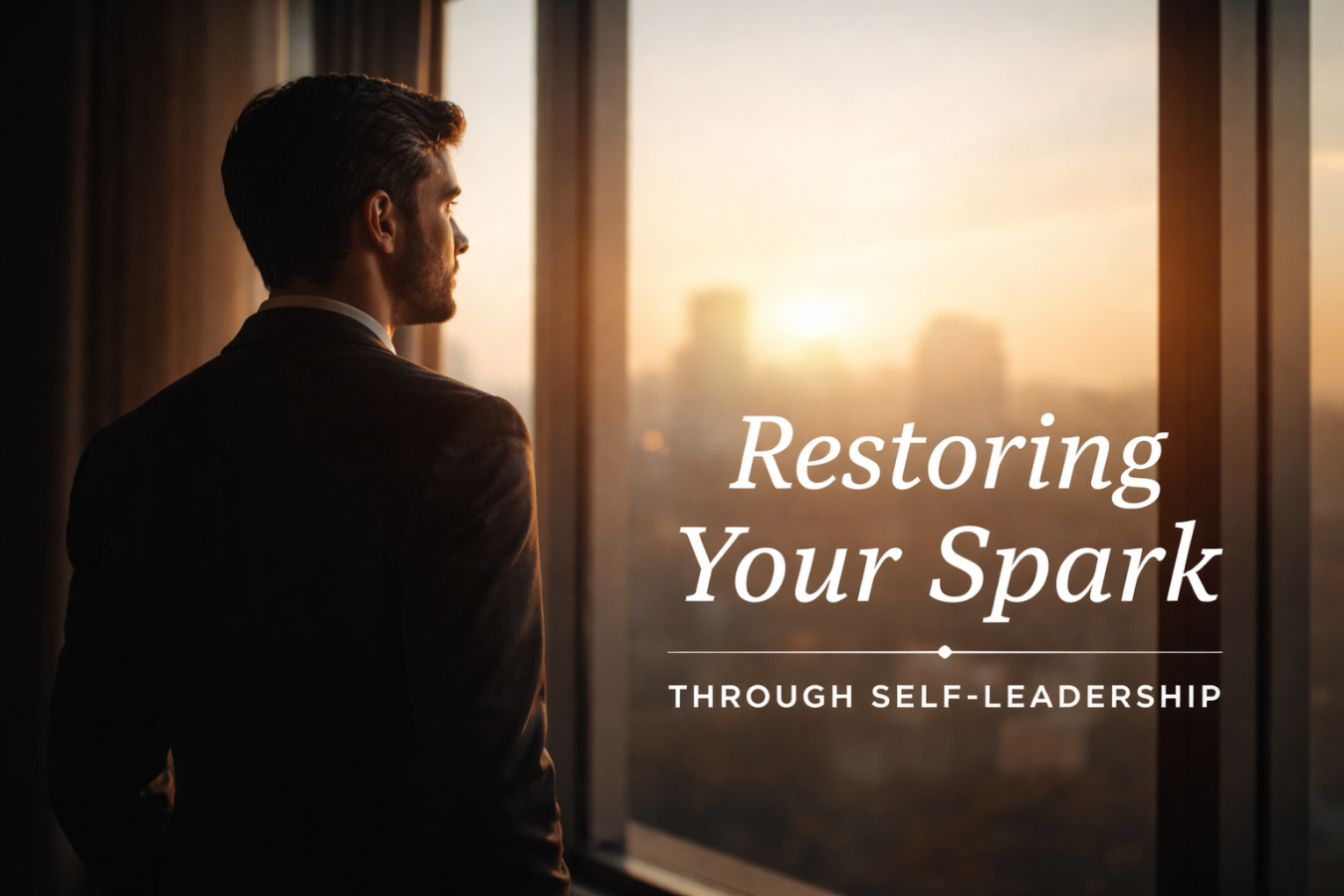
What they’re experiencing is disconnection. Not from their role. From their spark.
Your spark is that energy you feel when you get up in the morning. Remember that? It’s your sense of possibility. The part of you that feels alive and engaged with what you’re doing. And, when it dims, it doesn’t just affect your work, it shows up in other areas of your life. It impacts how you think. How you show up. How present you feel with others, at work and at home.
The mistake many people make is thinking that you have to make external changes to fix this internal disconnect. That’s where self-leadership begins.
The Gap Most People Avoid
Almost everyone carries a quiet awareness that something is off. Not dramatically wrong, just misaligned. It’s normal.
It sounds like this:
“This should feel more fulfilling than it does.”
That’s the gap between where you are and where you want to be. And self-leadership doesn’t start by fixing that gap. It starts by acknowledging it, without judgment. Ignoring it doesn’t make it go away. It widens it.
Naming the gap isn’t weakness. It’s leadership…Self-leadership. Studies show that organizations with leaders who master self-leadership get the best work from their employees.
Self-Leadership Is a Choice, Not a Title
You don’t need a promotion or a team to begin leading yourself. In fact, self-leadership often shows up in the smallest moments, especially in the language you use.
There’s a profound difference between:
- “I have to stay late,” and
- “I’m choosing to stay late.”
That subtle shift restores agency. It puts you back in the driver’s seat. Self-leadership is about owning your choices, even the hard ones, instead of outsourcing your power to circumstances that you may or may not control.
The strongest leaders don’t feel powerful because of authority. They feel powerful because they lead themselves first.
Burnout Is Often an Energy Issue
Burnout isn’t always about workload. More often, it’s about energy leaks that we’ve normalized.
- Constant availability.
- Eating lunch at your desk.
- The long daily commute.
- Relationships that drain more than they restore.
Self-leadership asks a different question: What drains your energy and what restores it?
You don’t fix burnout by pushing harder. You fix it by protecting what fuels you.
Why Small Steps Matter More Than Big Plans
When you feel disconnected from your spark, you often believe you need a massive plan to get it back. You usually don’t.
Self-leadership is about momentum, not motivation. One small, visible action that proves to you: “I can.”
Confidence follows action, not the other way around. The smallest step is often the most powerful because it creates evidence that change is possible. And, that’s influential to your confidence.
Self-Leadership Creates Influence Everywhere
Leadership doesn’t stop at work. You lead in more places than you realize; your family, your peers, your community.
When you reconnect with your spark, people feel it. Presence is influence.
Self-leadership isn’t about being in charge. It’s about being grounded, intentional, and aligned so others feel safe doing the same.
When you lead yourself well, you give others permission to do it too.
That’s purpose. That’s influence.
If this reflection resonates, I go deeper into self-leadership and reconnecting with your spark in this conversation with Heike Yates, author of Pursue Your Spark on my YouTube channel.